Motorized shades sound like a small luxury until you notice how often you adjust the same windows. Maybe the afternoon sun lands on a work desk every day, or the high windows above the living room are so inconvenient that their coverings stay in one position for months. The appeal is not just pressing a button; it is making light control practical enough to use.
So, are motorized shades worth it? For some rooms, absolutely. For others, a simple manual shade is easier, less expensive, and entirely sufficient. The best decision comes from understanding the room, the controls, and the installation rather than starting with a smart-home feature list.
What motorization actually changes
A motorized shade uses a powered mechanism to raise or lower the covering. Depending on the system, you may operate it with a wall control, handheld remote, app, preset schedule, or an integrated home control system. The fabric still determines privacy, light filtering, and appearance; the motor changes how conveniently you use it.
This distinction matters because automation cannot rescue a poor fabric choice. A motor will raise the wrong shade perfectly, but it will not make a sheer material give you bedroom-level darkness. Select the shading performance first, then determine which controls would improve your routine.
A single button that closes several windows together may be valuable in a large room. A schedule that adjusts coverings at predictable times can be useful when an area receives strong sunlight. But a good system should also be simple enough for guests and family members to operate without instructions.
The rooms where motorized shades make the most sense
High or hard-to-reach windows are an obvious case. If a shade is above a stairwell, behind furniture, or over a tall wall of glass, ordinary manual controls can be awkward. Motorization turns a task you might avoid into something manageable from a convenient location.
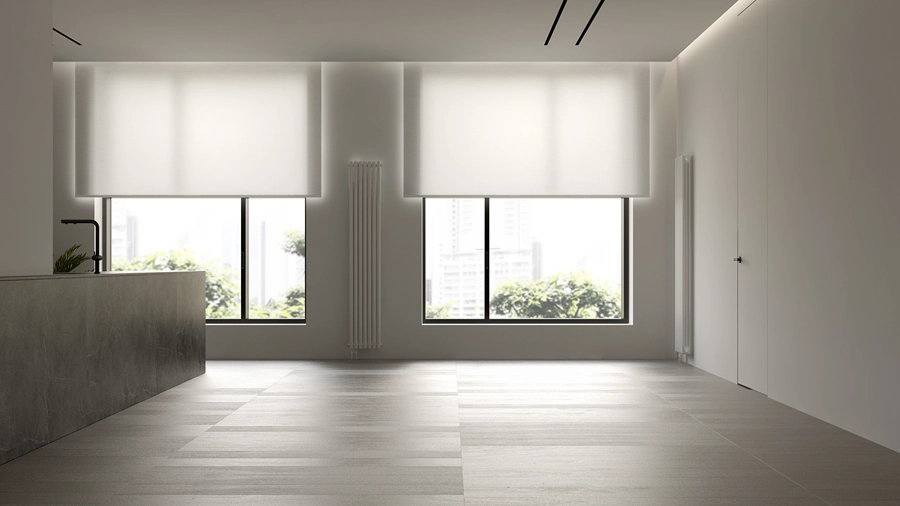
Large living rooms with several windows are another good fit. Instead of adjusting every shade individually, you may be able to operate compatible units together. That can help preserve a consistent look and makes it more likely that the coverings will be used when sunlight becomes uncomfortable.
Tucson homeowners sometimes notice that a room feels different from morning to afternoon even when the thermostat has not changed. Low-angle sunlight can create sharp glare on a television or computer screen. Well-planned shading provides a more immediate way to respond to the light, especially when the user does not have to walk around the room to adjust multiple windows.
Bedrooms can benefit too, but it is worth being specific about the goal. A preset opening time may be convenient for someone who wants morning daylight, while a room-darkening fabric may matter more for someone who needs to sleep during the day. Motorization makes the movement easier; it does not replace the need for appropriate fabric and installation.
When a manual shade is the smarter choice
A reachable window that only needs adjustment once or twice a week may not justify the added complexity. Manual operation avoids power planning, charging, electronic controls, and compatibility questions. If the window already has a comfortable control position, a well-made manual shade may be the better use of the budget.
Motorization is also less compelling when the homeowner prefers a simple, tactile setup and does not want another remote or app. Not every household wants schedules and scenes. A solution that matches people’s habits will be used more often than a clever feature they find frustrating.
The right decision may be a mix. Some homes use motorized shades on tall or frequently adjusted windows and manual shades in small bedrooms or utility spaces. There is no rule that every window needs the same control technology to look coordinated.
Choose the power source carefully
Motorized shades can be battery-powered, hardwired, or powered by a nearby outlet, depending on the specific product. Each option has advantages and tradeoffs. Choosing a power method early can prevent visible cords or inconvenient maintenance later.
Battery-powered systems can be attractive in existing homes because they often avoid opening walls to run wires. The tradeoff is that batteries need periodic replacement or recharging, and access to the charging point must be practical. The interval varies with the motor, fabric weight, size of the shade, and frequency of use, so a generic promise about battery life is not useful.
Hardwired systems can suit new construction and major renovations, when wiring routes can be planned before the walls are finished. They avoid routine charging at each window, but the installation may involve additional labor and coordination with an electrician. Depending on the chosen system, wiring can also make integration across many windows easier to plan.
Plug-in power may work where a suitable outlet is nearby. Yet a visible cord can undermine a clean installation if its location is not considered. A sensible power decision should account for the finished room, not just whether the motor can be made to run.
A remote is not the same as a smart-home system
Some motorized shades work entirely with a dedicated remote or wall control. That may be all you need if your goal is to move several coverings together. It also avoids the assumption that reliable shade operation requires a phone, cloud account, or broader automation setup.
A more integrated system can support coordinated scenes or schedules when the motor, controller, and other devices are compatible. For example, certain setups can adjust shades alongside lighting or other home functions. The practical details depend on the products and control platform, so confirm compatibility before ordering.
If you already have smart lighting or another automation system, ask whether the proposed shades can join it without creating a confusing second control experience. If you are starting from scratch, decide whether your priority is convenient shade control or a larger connected-home project. Those are related but separate buying decisions.
Technology Specialists offers home automation services as well as window treatments, so there is an opportunity to think about both parts together. The goal should be a system that remains straightforward to operate when the initial excitement of installation has passed.
Think about the fabric and the room first
It is tempting to compare motors before choosing a shade, but fabric and fit create much of the everyday experience. Light-filtering fabric can preserve natural light, while a more opaque material offers increased room darkening. Cellular, roller, Roman, and sheer-style shades have different appearances and may have different limits for motorized operation.
In a room with strong sun exposure, ask what problem the shade needs to address. Is it glare on a screen, unwanted views from outside, or the feeling of sitting next to a bright window? These are different concerns, and the right fabric for one is not necessarily the right fabric for another.
The U.S. Department of Energy notes that how window coverings are used affects solar heat gain and daylight in a home. That supports a practical reason for easy controls: a covering that people operate at the right time may be more useful than one that stays open or closed because the mechanism is inconvenient. Actual comfort and energy effects still depend on the product, windows, and habits.
The everyday maintenance people forget to ask about
A motorized shade has moving parts and power requirements, so maintenance should be discussed before purchase. Battery-powered systems need an accessible charging or replacement method. With hardwired systems, accessibility for service still matters even if there is no charging routine.
Ask what happens when the remote is lost, a controller needs resetting, or home Wi-Fi is unavailable. Some products use local controls and can operate without internet, while others rely on an additional hub for certain features. Understanding that difference is more valuable than a long list of promised app integrations.
Also consider sound and movement speed, especially near a bedroom or quiet workspace. Many shades operate discreetly, but performance varies with the motor, size, and installation. A live demonstration can reveal more about noise and control response than a product description.
The fabric itself still needs ordinary care. Follow the manufacturer’s recommendations for dusting or spot cleaning, and keep liquids away from electrical components. A shade that can be serviced without removing surrounding trim will be easier to maintain over its lifetime.
What determines the cost?
There is no single meaningful price for motorized shades because the project can range from one standard window to a whole-home installation. Window dimensions, fabric, hardware, power type, control system, number of shades, and installation conditions all affect the quote. A larger project may also need more time for setup and programming.
Rather than comparing only the motorized upgrade price, compare what each proposal includes. Ask about measurement, mounting, power supplies, control devices, installation, testing, user guidance, and warranty conditions. A less expensive quote can be less useful if it assumes you will handle important setup details later.
It is reasonable to start with one or two high-value windows instead of motorizing an entire home. That gives you a chance to see whether the convenience matches your habits before extending the approach elsewhere. If future expansion is likely, tell the installer during the first discussion so the controls can be planned accordingly.
Safety and accessibility matter too
Motorized and cordless window treatments can also reduce the need for accessible operating cords. This is especially relevant in homes with young children, where the U.S. Consumer Product Safety Commission recommends cordless coverings. Check the safety characteristics of the specific model rather than assuming every motorized product is built the same way.
For someone with limited reach or mobility, easier control can be more than a convenience. A wall button or remote placed in a comfortable location can make routine adjustments more accessible. The simplest interface is often better than one that requires navigating several phone screens.
Questions to ask before you commit
Ask the installer to show how the shade will work on an ordinary day, including what happens during a power or internet interruption. Clarify whether the power method suits the room, how charging or service will work, and whether grouped control or integration is available for the exact products under consideration. Those practical answers are often more revealing than the size of a feature list.
It also helps to see real fabric samples in the room and at the time of day when sunlight is most troublesome. A shade may look different in a showroom than it does against a west-facing Tucson window. The investment should solve the actual problem you have, not an imagined one.
So, are motorized shades worth it?
They are often worth considering when windows are hard to reach, coverings are adjusted frequently, or several shades need to move together. They can make light control a more natural part of the household’s routine and can fit into a broader home automation plan when compatible products are selected. The value comes from everyday use, not from the motor alone.
If you have a few easily reached windows and prefer simple controls, manual shades may be perfectly adequate. If you want to explore the available fabrics, power options, and installation choices, review our window shades services. A good starting point is a conversation about which windows cause the most trouble and what a convenient solution would look like.