Window Solutions
Window Tint/Film
Windows Blinds
Windows Shades
Window Solutions
Window Tint/Film
Windows Blinds
Windows Shades

Technology Specialists designs and installs Commercial Video Wall systems for businesses, offices, convention centers, restaurants, churches and other commercial spaces throughout Tucson and surrounding communities. From the displays and mounting to video processing, cabling and controls, we bring the different pieces together into one system that’s easy to use.
Let’s Talk About Your Video Wall
Tell us about the space, the size you have in mind and how you plan to use it. We’ll help you explore the right setup.
Designed for Your Space
Every room is different. We consider viewing distance, wall size, lighting and how people will use the space so the finished video wall feels like it belongs there.
Clear, Consistent Visuals
Brightness, resolution, pixel pitch and display technology all affect what people actually see. We design around the environment so the image stays clear and balanced where it matters.
Simple, Integrated Control
Your video wall may need to handle signage, presentations, TV, cameras or multiple sources. We bring those pieces together so daily operation stays simple.

Tyler S — Google Review
"I dealt with Kyle and everything about the order with Technology Specialists was 10 out of 10. He was an excellent communicator and the install was perfect. Thank you!"
Sam J — Google Review
"These guys are very professional. Spoke to Colby and he came right out and offered some great advice and products I didn't even know existed. Called to tell me his guys would be there at 8:00 am, and they sure were. Tim was very polite and got the job done in no time. Would highly recommend them."
A video wall project shouldn’t start with “How many screens can we fit on this wall?”. It should start with what you need the wall to do.
Maybe you want customers to notice your brand the second they walk into the building. Maybe your team needs several data sources visible at the same time. Or maybe you simply need one very large, clean image that everyone in the room can see. Those situations can call for very different systems.
The size of the wall, viewing distance, ambient light, content, mounting surface and available infrastructure all affect the final design. We look at those details first so the displays, processing equipment and controls work together instead of becoming separate pieces that happen to be mounted on the same wall.
A little planning here makes a big difference later.
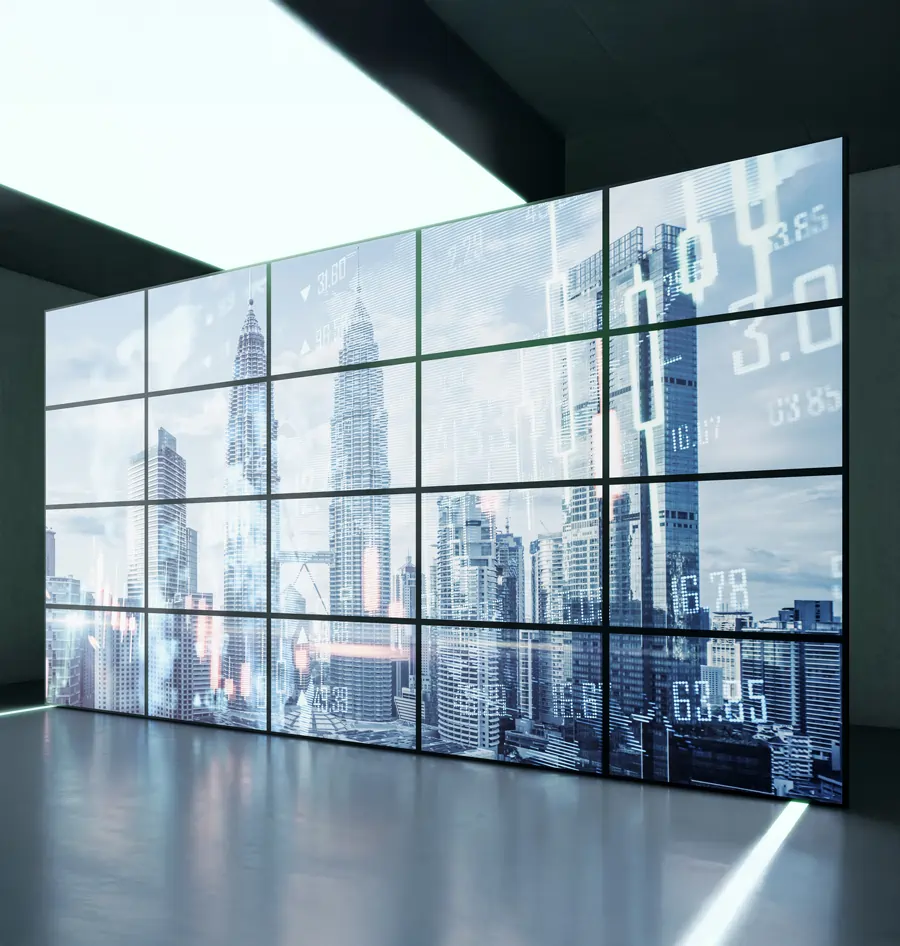
LED and LCD video walls can both deliver excellent results, but they behave very differently. Resolution, pixel pitch, screen size and viewing distance all need to make sense together.
You don’t necessarily need the highest specification available. You need the right image quality for the distance people will actually be watching from.
Large display systems need more thought than hanging a single television.
We consider wall construction, display weight, mounting positions, ventilation, service access and how the screens need to align. The goal is a finished installation that looks intentional — not like several screens were added one at a time.
What happens behind the displays matters just as much as what people see.
A video wall may need to handle one large image, multiple sources, different layouts or content from devices located elsewhere in the building. Processing and distribution are planned around how the system will actually be used.
A powerful system isn’t very useful if nobody knows how to operate it.
We can bring sources, layouts and basic system functions into a more straightforward control experience, so staff can use the wall without having to understand everything happening behind it.
There isn’t one type of video wall that’s right for every project.
LED gets a lot of attention, and for good reason, but LCD can still be a very practical choice. What matters is where the display is going, how large it needs to be and what people will be viewing on it.
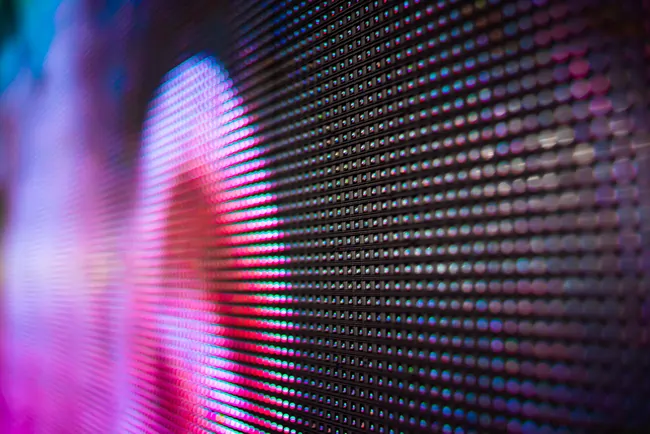
LED video walls are built from modular panels that come together to create one large image.
Because there are no traditional screen bezels between panels, the finished display can look much more seamless than an array of individual monitors. LED also gives us a lot of flexibility with overall size and aspect ratio.
They can be a strong fit for larger installations, high-impact lobbies, churches, hospitality spaces, entertainment areas and other environments where the display itself is meant to become part of the room.
Pixel pitch is especially important with LED. A display viewed from a few feet away has very different requirements from one designed to be seen from across a large room.
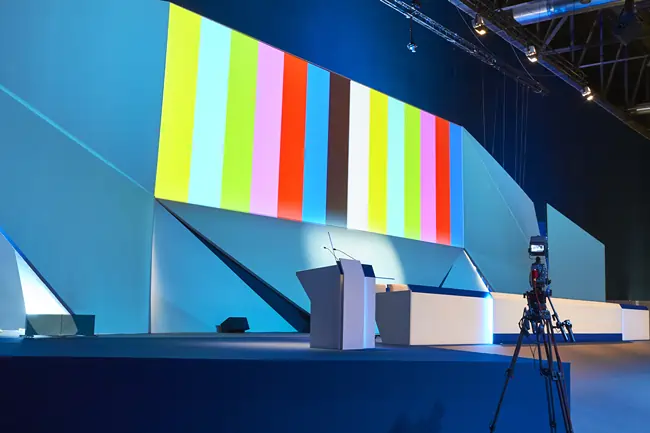
LCD video walls use multiple professional displays arranged together — commonly in configurations such as 2×2, 3×3 or larger.
You’ll see thin bezels between displays, so they don’t create quite the same seamless look as direct-view LED. On the other hand, LCD can make a lot of sense when viewing distances are shorter, the layout is relatively conventional or the budget doesn’t justify a large LED system.
They work well for monitoring environments, offices, conference facilities, retail spaces and applications where image detail is important.
A video wall can do much more than play one big video. The way it’s used should shape the way it’s designed.
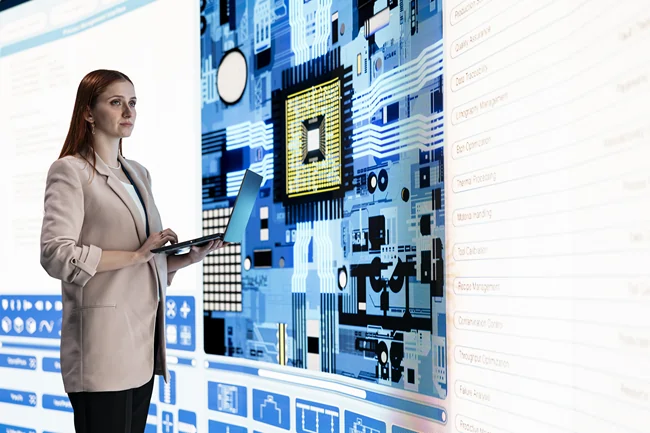
A large visual display can turn an otherwise empty wall into part of the customer experience.
Use it for branded content, product visuals, company messaging, presentations or a mix of content throughout the day. For showrooms, it can also give you a much more flexible way to present products without constantly changing physical displays.
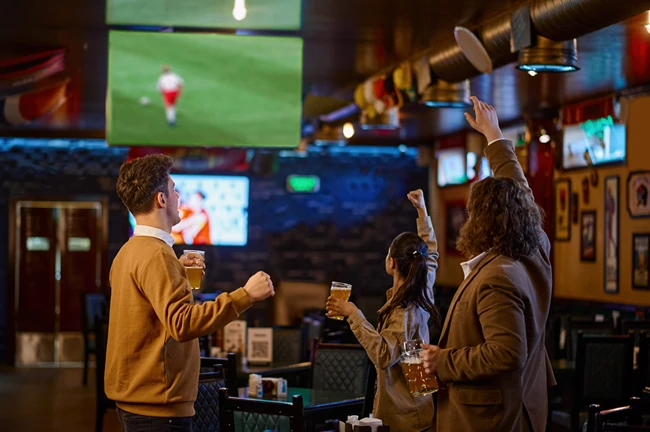
Sports, entertainment, menus, promotions and events can all compete for screen space.
A well-designed video wall gives you more flexibility. Depending on the system, the wall can show one large source or be divided into different content areas when needed.

Video walls help retail environments get attention from farther away than a conventional display.
They can be used for promotions, brand campaigns, product launches, informational content or changing digital signage without having to constantly replace printed materials.
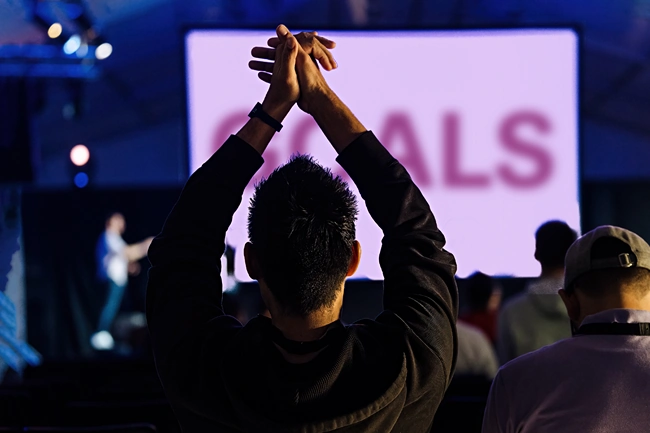
Large-format displays can help people throughout the room clearly see presentations, lyrics, live video and other visual content.
Viewing distance, camera content, room lighting and sightlines all matter here, especially in larger spaces.
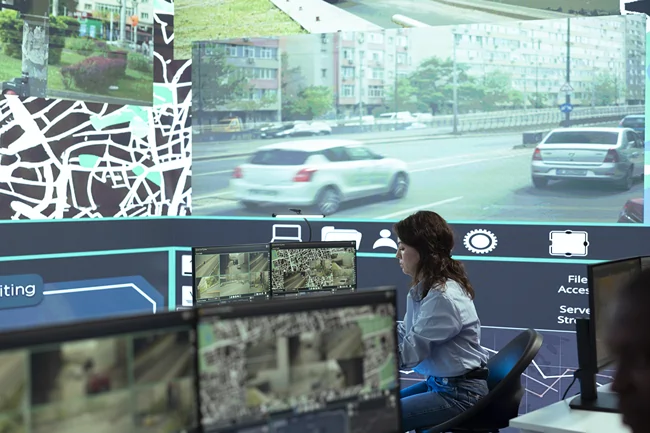
Some environments need several sources visible at once rather than one giant image.
Video walls can bring camera feeds, dashboards, maps, monitoring software and other information together so teams can see what’s happening without jumping constantly between screens.
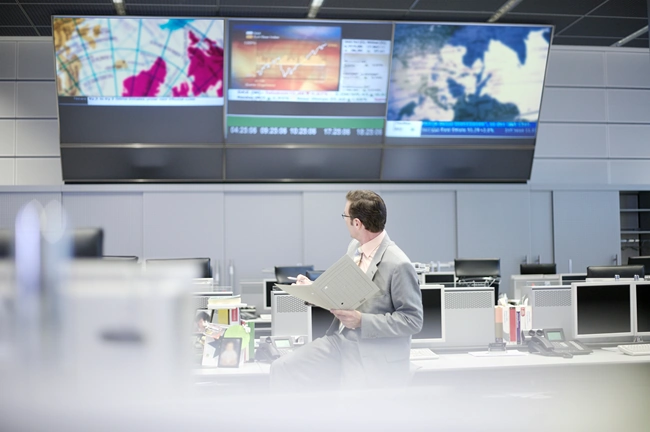
A large display can make presentations, dashboards, video calls and training material easier to see in bigger rooms.
Depending on the application, the wall can also support multiple sources at once, making it useful when people need to compare information side by side.
Before choosing the displays, let’s look at the room, viewing distance, content and how you expect the system to be used.
The display gets most of the attention, but a good video wall is really the result of several decisions working together.
This becomes especially important with LED.
Pixel pitch affects how closely individual pixels are spaced together. Smaller pixel pitch generally allows comfortable viewing from closer distances, but it can also increase the cost of the system considerably.
The goal isn’t to specify the smallest possible pixel pitch. It’s to choose one that looks right from where people will actually stand or sit.
A display that looks fantastic in a dark showroom may behave very differently in a Tucson lobby full of windows.
We look at the lighting conditions in the room, reflections and when the display will be used. That helps determine what level of brightness and what display technology makes sense without overspecifying the system.
There’s a lot happening behind a video wall.
Power, network connections, video cabling, processors and mounting hardware all need somewhere to go. And sooner or later, someone may need to get back there.
We plan the infrastructure and service access from the beginning, including network connectivity where the displays, processors or content systems depend on it. That makes maintenance, troubleshooting and future equipment changes much easier.
What are you actually going to show?
One full-screen image? Several camera feeds? Sports, presentations or digital signage? Knowing that early helps determine the video processing, source switching and control the system needs.
Depending on the project, the wall can display one source across the entire canvas, divide the screen into different zones or switch between several sources throughout the day. If content changes frequently, we can also plan for digital signage or content management from the start.
The screens are only one part of the project. A good installation comes from getting the details right before anything goes on the wall.
We start by looking at the room.
That includes wall space, viewing distances, ambient light, possible display sizes, equipment locations and how you want to use the system. We’ll also look at the existing infrastructure so we know what can stay and what may need to change.
Once we understand the space, we can choose the right approach.
That may involve LED or LCD displays, mounting, video processing, source equipment, cabling, networking and controls. We also think about how the system might grow later so today’s design doesn’t unnecessarily box you in.
Displays are mounted and aligned, equipment is connected, signals are routed and controls are configured.
If the video wall needs to work with other audio or video systems in the building, we bring those pieces together as part of the installation rather than treating the wall as an isolated system.
Before we consider the project finished, we test the system and make adjustments where needed.
That includes checking sources, layouts, display alignment, image consistency and controls. We’ll also walk your team through normal operation so they’re comfortable actually using it once we leave.
A commercial video wall isn’t just a group of displays mounted together. The screens, processing, cabling, controls and the room itself all need to work as one system. That’s where having an experienced local AV team makes a difference.
When we plan and install a video wall, we focus on:
The goal is pretty simple: build a video wall that looks right, works the way your team needs it to, and doesn’t become unnecessarily complicated to operate or maintain.
Tell us what you’re trying to accomplish. We’ll help you sort through the display technology, size, infrastructure and controls before the project gets more complicated than it needs to be.
A direct-view LED wall is built from LED modules that create a larger, nearly seamless display. LCD video walls use multiple professional flat-panel displays placed together, so thin bezels remain visible between screens.
LED generally offers more flexibility for very large displays and custom sizes, while LCD can make a lot of sense for smaller configurations and closer viewing distances.
It depends on the room, viewing distance and the type of content you plan to show.
A wall designed mainly for bold advertising graphics has different requirements from one displaying detailed spreadsheets or security cameras. We usually determine size after understanding where viewers will be and what they need to see.
Pixel pitch is the distance between individual LED pixels.
In simple terms, a smaller pixel pitch can look better from closer distances. That doesn’t mean the smallest pitch is automatically the best choice, though. The right value depends largely on how far viewers will normally be from the display.
Yes.
With the right video processing, a wall can be divided into different areas and display multiple sources at once. That’s useful for control rooms, sports environments, monitoring, presentations and other applications where one source isn’t enough.
In many cases, yes.
The first step is to look at the existing equipment, cabling and signal formats. From there we can determine what can be reused and what needs to be added or updated.
Usually there are specific power, video, network and control requirements.
Exactly what’s needed depends on the displays, processor, source locations and how far signals need to travel. This is one reason it’s helpful to plan the wall before construction or remodeling is finished.
There isn’t a useful one-price answer.
Cost can change significantly based on LED versus LCD, overall size, pixel pitch, mounting requirements, processing equipment, cabling, controls and installation conditions.
A site visit and a clear idea of what you need the wall to accomplish usually gives us a much better starting point than choosing displays based on price alone.
Absolutely.
A video wall can display menus, promotions, branding, announcements, schedules and other digital signage content. If the content will change frequently, we can also plan the system around an appropriate content management solution.
Yes, although existing spaces sometimes require more planning.
We need to look at the wall, available power, wiring routes, equipment locations and service access. In some cases, some infrastructure may need to be added before the displays can be installed properly.

Licensed & Bonded
ROC# 285238
ROC# 306779
HOURS
Monday - Friday
8 am - 5 pm
6615 N Oracle Rd
TUCSON, AZ 85704
(520) 784-2500
4418 E SPEEDWAY BLVD Ste. B
TUCSON, AZ 85712
(520) 784-2500
4351 N FAIRVIEW AVE Ste. B
TUCSON, AZ 85705
(520) 784-2500
SIERRA VISTA
999 E FRY BLVD SUITE 203
SIERRA VISTA, AZ 85635
(520) 784-2500