A window can feel like the most vulnerable part of a home or business. Glass lets in daylight and keeps a room connected to the outdoors, but a broken pane can create a mess, expose a space, and leave people wondering how much protection they really have.
Security window film is often mentioned as an affordable way to strengthen existing glass. That description is a useful starting point, but it can also create expectations that the film was never designed to meet. The more important question is not whether a window becomes “unbreakable,” but what happens to the glass when it breaks.
Here is what security film can realistically do, where its limits become important, and what homeowners and business owners should ask before deciding whether it makes sense for their property.
How security window film works
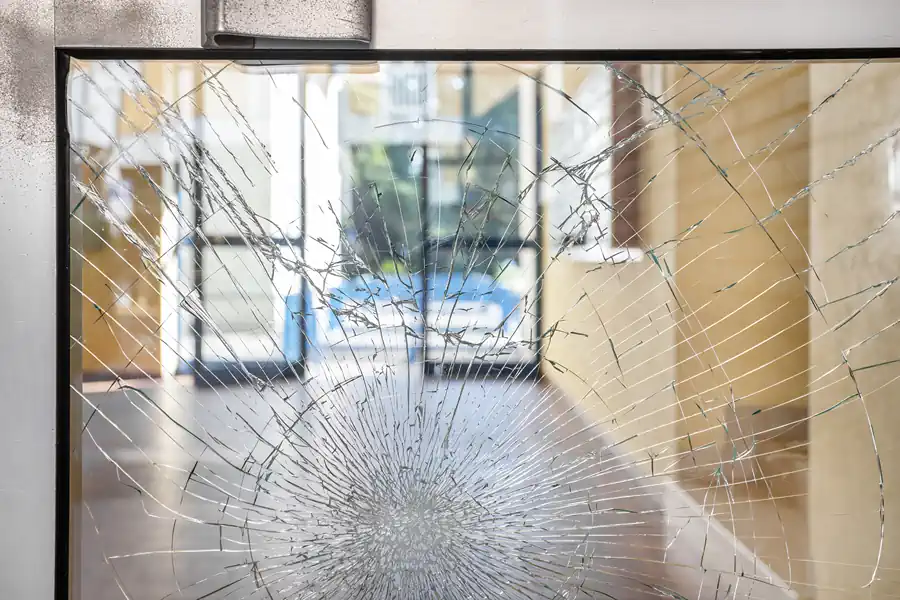
Most security films are made from layers of tough, transparent polyester and a strong adhesive. Once installed on glass, those layers create a flexible barrier that can help keep many broken pieces attached to the film rather than scattering across the room. The glass can still crack or shatter; the film changes how the damaged pane behaves.
Imagine two windows struck in a similar way. An untreated pane may break into pieces that fall away, depending on the glass type, while a filmed pane may hold more of those fragments together. The difference can matter when people are close to the window or when the opening is part of a door or storefront.
The result depends on far more than the film itself. Glass type, pane size, film construction, adhesive, installation quality, and the way the glass is held in its frame all influence performance. This is why a good installer asks about the window before recommending a product.
Does it stop a break-in?
Security film may make a quick smash-and-reach attempt more difficult, particularly when the filmed glass remains attached to the frame. A pane that stays together can take additional effort to clear, and that delay may discourage someone looking for easy access. However, no film should be presented as a guarantee against forced entry.
A determined person can continue striking the window, attack the frame, or find another entry point. Film by itself is not a lock, an alarm, or a replacement for a complete security plan. If break-in resistance is the main goal, it is worth asking what the proposed glass-and-film system has actually been tested to withstand.
A useful distinction is between keeping shattered glass together and keeping an opening secure after impact. The first is a common purpose of security film; the second can require additional measures, including a compatible attachment system around the glass perimeter. Those details should be evaluated for each opening rather than assumed from a product brochure.
What about accidental impacts and flying debris?
Not every broken window is the result of an attempted break-in. A ball, a tool, or other accidental impact can damage glass during everyday activities. Film can help reduce the amount of loose glass that falls inward, although the precise outcome will depend on the impact and the window assembly.
For a household, that fragment-retention benefit may be the most relevant reason to consider film. For a business, keeping damaged glass more contained may also make the immediate aftermath easier to manage while repairs are arranged. It does not mean the window can be left unrepaired or safely used as normal once it has cracked.
Southern Arizona also brings strong sun, dust, and occasional intense storms. Those conditions make it sensible to ask about durability and glass safety, but they do not turn every security film into a storm-rated glazing system. If windborne-debris or code-related performance is important, request documentation for the specific tested combination of glass, film, frame, and attachment system.
Security film is not the same as solar-control tint
People sometimes use “window tint,” “window film,” and “security film” as though they mean the same thing. They are related products, but they address different priorities. Solar-control films are commonly selected to manage heat, glare, and sunlight, while security films emphasize holding broken glass together.
Some products combine solar-control properties with a security construction. Others are almost clear and have little visible effect on the room. Neither appearance nor thickness alone tells you everything about how well a film will perform against impact.
If keeping a Tucson living room more comfortable is the primary concern, a solar-control film may be the more direct answer. If the concern is glass breakage at a door, entryway, or exposed window, security performance deserves more attention. Asking an installer to separate those goals prevents you from paying for one benefit while expecting another.
Where security film can be useful
Glass doors and narrow sidelights are common places to start the conversation. They sit near busy entry points, and broken glass in those areas can create a practical safety concern. Large living-room windows and sliding patio doors may also warrant discussion, especially in homes where children, pets, or frequent activity bring people close to glass.
On commercial properties, storefront glazing, reception areas, and interior glass partitions each have different needs. A retail business may be concerned about an easily accessible front window, while an office might care more about keeping fragments contained in a busy shared space. The best choice depends on how the glass is used and what risk the owner is actually trying to reduce.
There is no benefit in treating every pane as identical. An interior partition, a tempered-glass door, and an older residential window may call for different film specifications or no film at all. A site assessment should make those distinctions clear.
Why the frame and installation matter
A film is applied to the glass surface, but glass is only one part of a window. Even if broken fragments stay attached to the film, the entire pane can sometimes be pushed out of the frame. In that situation, the film has held the pieces together without preserving the opening.
For applications where keeping the pane in place is critical, a qualified installer may recommend an attachment or anchoring method that connects the filmed glass to the frame. Compatibility matters: not all frames, sealants, glass types, or building conditions support the same approach. The attachment method should be specified rather than treated as an optional detail that nobody discusses.
Professional installation also affects the finished result. Dirty glass, poor edge preparation, bubbles, or inconsistent application can undermine appearance and potentially compromise performance. Homeowners should expect a discussion of surface preparation, curing time, and care instructions, not only the number of layers in the film.
Is thicker film always better?
Thickness is one specification, not a complete measure of protection. A thicker film may be suitable for some applications, but overall performance depends on the film’s construction, adhesive, glass, frame, and installation method. Two products described with the same thickness may not behave identically.
Instead of asking for the thickest option, ask which film is appropriate for the particular windows and objective. A reputable installer should explain why a product is recommended and provide relevant manufacturer information. When a specific level of performance is claimed, request test data that matches the intended application.
You should also ask how the film will look once installed. Clear security film is designed to preserve a natural view, but differences in reflectivity, color, and optical clarity can still matter. Seeing a sample on glass is more useful than making a decision from a label alone.
How does it compare with laminated glass?
Laminated glass is manufactured with an interlayer bonded between glass plies. Security film, by contrast, is generally added to an existing pane after the window has been made. Both approaches can help retain fragments under certain conditions, but they are not interchangeable and should not be described as having identical performance.
Replacing glazing may be the right answer for a new construction project or a major renovation. Film can be attractive when the goal is to improve an existing window without replacing every pane. The choice depends on the building, budget, desired appearance, and any applicable safety or building requirements.
Tempered glass is another distinct category. It is designed to break into relatively small pieces rather than long, sharp shards. Adding film changes fragment behavior, but it does not change the underlying glass into laminated glass or make it immune to damage.
What security film cannot replace
It is easy to focus on the pane and overlook the rest of the opening. Functional locks, properly maintained doors and frames, outdoor lighting, and a sensible way to respond to an alarm all contribute to security. Film can be one layer in that larger approach, not a substitute for it.
Film also cannot repair damaged glass, correct a loose frame, or make a weak door structurally sound. If existing glazing is already cracked or badly deteriorated, the starting point is a proper repair assessment. Adding film over a problem is not the same as fixing it.
Finally, security film cannot promise that property will be protected or that occupants will avoid injury in every situation. Product claims should remain specific to demonstrated performance, and the limits should be explained before any installation begins.
Questions worth asking before installation
Start with the simplest question: What problem am I trying to solve? A homeowner concerned about accidental breakage may need something different from a store owner worried about repeated damage at an entrance. Clear priorities help the installer narrow the options without selling an unnecessarily complicated package.
Next, ask whether the recommendation includes the frame and any necessary edge attachment. Find out which windows are suitable, how long the work will take, and whether there are restrictions related to existing glass coatings or insulated glass units. Ask to see the film’s specifications and care instructions in writing.
You should also discuss appearance, cleaning, warranty coverage, and what to do if a pane breaks later. Some products have particular curing and maintenance requirements, and the installer should explain them in everyday language. If a particular safety standard or resistance rating matters to you, request verification for the complete tested assembly.
What to expect after installation
Security film is generally meant to be unobtrusive. The glass should still allow a normal view, although the final appearance depends on the product chosen and the condition of the existing pane. Minor moisture patterns can sometimes be visible while adhesive cures; your installer should explain what is normal and when the finished window should be evaluated.
Cleaning instructions matter because the film becomes the surface you touch on the installed side. Avoid improvising with abrasive tools or harsh products before reading the manufacturer’s recommendations. If the glass is damaged later, have a qualified professional assess the entire assembly rather than assuming that intact film means the window is still safe.
So, does security film really work?
Yes, when “work” means helping broken glass stay together and potentially creating another obstacle after an impact. It is most useful when its purpose, window type, installation details, and limitations are understood before the job begins. It is not a promise of unbreakable glass or a complete answer to every safety concern.
For Tucson homes and businesses, the best next step is usually to identify the specific openings that concern you and discuss realistic options for those windows. Technology Specialists explains the available approaches to security window film and can help you consider how film might fit alongside other practical improvements to the property.