The benefits of window film are noticeable in Tucson, where sunlight can affect indoor comfort, screen visibility, furnishings, and cooling demand. The right film can reduce solar heat and glare, improve privacy, filter ultraviolet radiation, update the appearance of glass, and help hold broken glass together. These advantages apply to homes and commercial properties, although the right product depends on the glass and the problem being addressed.
Why Window Film Makes Sense in Tucson
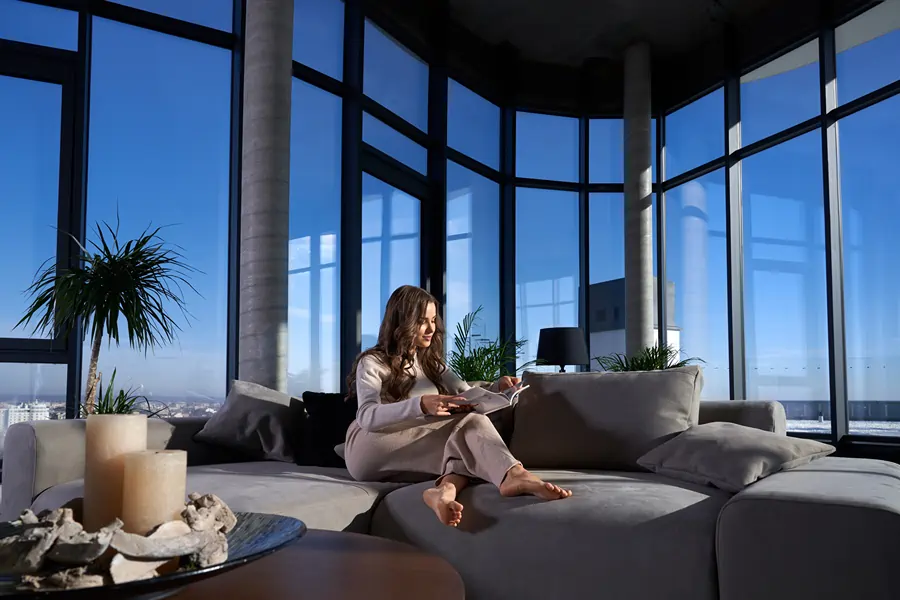
West- and south-facing glass may receive hours of direct exposure, creating hot areas that feel different from the rest of a home, office, store, or public building. Large windows can also produce glare, expose interiors to ultraviolet radiation, and reduce privacy in rooms facing streets, parking lots, or neighboring properties.
Window film works directly on the glass, addressing these problems without keeping blinds or curtains closed all day. It is most practical when the existing glass is in good condition.
1. More Privacy Without Giving Up Natural Light
Privacy is one of the most immediate window tinting benefits. In a home, film can make bathrooms, entry doors, street-facing rooms, and windows close to neighboring properties feel less exposed. Frosted, matte, patterned, and reflective options can reduce visibility while allowing daylight to enter.
Commercial properties often need privacy in conference rooms, offices, medical spaces, and glass partitions. Decorative films can obscure a direct view without closing the space.
Reflective products generally provide their strongest privacy effect during daylight. At night, interior lighting can make it easier to see inside, so spaces requiring privacy at all hours may be better served by frosted or opaque film.
2. Less Solar Heat and Fewer Hot Spots
Direct sunlight can make one side of a room much warmer than another. A living room may become uncomfortable every afternoon, a home office may heat up before the rest of the house, or employees may avoid desks close to a sunny window. These hot spots often lead people to close blinds, lower the thermostat, or use portable fans.
Solar control film rejects part of the sun’s heat before it builds up indoors. The result is a more balanced space, especially in Tucson properties with large panes, sliding doors, storefronts, or intense afternoon exposure.
Homeowners can review residential window film installation options in Tucson for rooms affected by excessive sunlight. Business owners and facility managers can explore commercial window film solutions for Tucson buildings when heat affects offices, schools, stores, restaurants, or other facilities.
3. Reduced Glare on TVs and Computer Screens
A bright room is pleasant until sunlight reflects off a television, computer monitor, presentation screen, or polished surface. Glare can wash out images, make text harder to read, and force people to adjust blinds throughout the day. At home, it may affect remote work or television viewing. In businesses, it can interfere with desk work, video conferences, and presentation screens.
Window film can soften harsh sunlight and reduce reflections while preserving more daylight than closed blinds. A film that is too dark may change the room more than necessary, while one that is too light may not provide enough glare control. Window orientation and room use should guide the selection.
4. Protection Against UV-Related Fading
Sunlight can gradually change the appearance of furniture, fabrics, rugs, hardwood floors, artwork, merchandise, and other interior materials. The damage develops slowly, so it may not become obvious until exposed areas look lighter than sections protected by furniture or shade. Ultraviolet radiation contributes to this process, along with visible light, heat, material quality, and exposure time.
Quality films can filter a substantial amount of UV radiation while still allowing natural light through the glass. Window film cannot reverse existing fading or eliminate every cause of deterioration. Its value is preventive: reducing continued exposure may help interior materials retain their appearance for longer.
Our guide to how window film helps protect furniture, flooring, and décor from UV exposure explains why fading develops gradually and which areas are most likely to benefit.
5. Lower Cooling Demand and Better Energy Efficiency
When less solar heat enters through the glass, the air-conditioning system may not need to work as hard to maintain a comfortable temperature. Actual savings depend on the film, glass area, window orientation, shading, building envelope, thermostat settings, and HVAC efficiency. Window film should not be described as producing the same percentage of savings in every property.
The benefit is often most noticeable in spaces with extensive sun exposure. A homeowner may find that a previously hot room becomes easier to cool. A business with a large glass façade may reduce temperature differences between perimeter work areas and interior spaces. Lowering unnecessary solar gain can support more efficient operation during Tucson’s hottest months.
6. A Cleaner, More Consistent Appearance
Window film can change the appearance of glass without replacing it. Neutral solar films can create a more uniform exterior, while frosted and patterned products can turn plain glass into a finished design element. Decorative film can also update an interior partition with less disruption than installing specialty glass.
For homeowners, film can improve entry doors, bathroom windows, and sidelights. For businesses, it can add privacy, modernize partitions, and give storefront or lobby glass a more polished appearance. Many products remain subtle rather than dark or mirrored.
7. Added Safety When Glass Breaks
Standard glass can create loose, sharp fragments when it breaks. Safety and security films are thicker products designed to help hold shattered glass together. They do not make a window unbreakable, but they can reduce the scattering of glass after an impact and make it more difficult for the opening to clear immediately.
In homes, this added layer may be useful near doors, large panes, or locations where accidental impact is a concern. In commercial settings, safety and security window films may be considered for storefronts, schools, offices, and other buildings where broken glass could cause injuries or expose property.
Performance depends on the film, glass, framing, attachment method, and impact. A solar-control tint should not automatically be treated as a security product; the film must be specified for its intended purpose.
Residential and Commercial Priorities Are Different
The core benefits are similar, but the priorities often differ. A homeowner may focus on a hot family room, fading hardwood, privacy near the street, or glare on a television. A commercial project may involve larger glass areas, employee comfort, customer visibility, interior partitions, merchandise protection, or installation around normal operations.
Commercial projects may also require a consistent appearance across an entire façade, with different films assigned to different functions.
What Window Film Cannot Do
Window film does not repair failed seals, damaged frames, water intrusion, or glass that already needs replacement. It also does not provide the same insulation value as replacing an outdated window assembly with a modern unit designed for higher thermal performance.
Compatibility matters as well. Certain films may not be appropriate for every type of glass, particularly when dual-pane construction, existing coatings, damage, or manufacturer warranties are involved. The glass and film specifications should be reviewed before installation rather than choosing a product based only on shade or appearance.
How to Choose the Right Film
Start by defining the problem. A room needing daytime glare control may require a different film than a bathroom needing permanent privacy. A storefront concerned about shattered glass needs a different specification than an office trying to reduce heat while preserving a nearly clear exterior.
Window orientation, glass type, existing shading, desired light level, and interior finishes should all be considered. In many cases, the best solution is not the darkest film. A neutral or nearly clear product may provide the desired performance without changing the building’s character. Professional installation also helps produce clean edges, consistent alignment, and a smooth finish.
Are the Benefits of Window Film Worth It in Tucson?
For many Tucson homes and businesses, window film is worth considering when sunlight is creating a recurring problem. It can make hot or glare-heavy rooms easier to use, reduce UV exposure, provide practical privacy, improve the appearance of glass, and add a measure of protection when glass breaks.
The best results come from selecting the film around the property rather than assuming one product fits every window. Technology Specialists can assess the glass and exposure, then recommend a film that balances heat control, daylight, privacy, appearance, and safety.