Window Solutions
Window Tint/Film
Windows Blinds
Windows Shades
Window Solutions
Window Tint/Film
Windows Blinds
Windows Shades

If your system sounds loud but not clear, the room is usually the reason. Room Acoustic treatments help control reflections and bass so dialogue and music sound cleaner. Technology Specialists designs solutions for home theaters, home studios, and everyday living spaces in Tucson.
Tell us about your room
Share what you’re hearing and how you use the space. We’ll recommend practical acoustic treatment options and next steps.
Clear dialogue and cleaner detail
Reduce harsh reflections so voices are easier to follow and music sounds more focused, especially in home theaters and media rooms.
Tighter bass, fewer boomy spots
Bass traps and smart placement help smooth low frequencies, so bass feels more consistent from seat to seat.
A plan that matches your room
Panels, bass traps, and ceiling treatments are selected and placed based on layout, surfaces, and how you use the space.
When people upgrade speakers, receivers, or a subwoofer, they expect a night-and-day difference. Sometimes they get it. Other times, the system sounds loud but not clear, dialogue feels hard to understand, or bass seems to hit in one seat and disappear in another. That is usually not a “bad speaker” problem. It is a reflection and decay problem.
Sound waves bounce off hard surfaces like drywall, glass, tile, and flat ceilings. Those reflections arrive a fraction of a second after the direct sound, which can smear detail and create a harsh or boxy character. In the low frequencies, rooms can create peaks and dips that make bass feel boomy in one spot and thin in another.
Room Acoustic Treatments are how you take control of that.
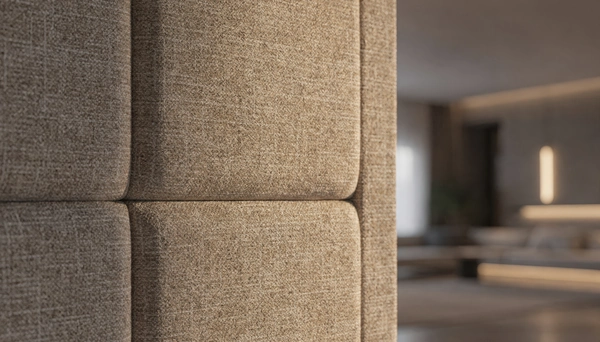
If your room sounds echoey, boomy, or just not clear, a few targeted changes can make a noticeable difference. Tell us what you’re hearing and how you use the space. We’ll help you narrow down practical treatment options that fit the room and the look you want.
Room acoustic treatments do more than “make the room quieter.” They help your system sound cleaner, more balanced, and easier to enjoy by controlling reflections and low-frequency buildup. If you’re hearing echo, boomy bass, or dialogue that never feels clear, the room is usually the reason. With the right mix of acoustic wall panels, bass traps, and wall or ceiling treatments, you can get more detail and consistency without changing your speakers. Below are the most common sound problems we solve for Tucson homeowners.

Hard surfaces like drywall, tile, and glass can make a room sound “live” in a way that hurts clarity. Acoustic panels and ceiling treatments reduce echo and reverb so voices and instruments sound more natural. This is especially noticeable in open layouts and rooms with high ceilings.
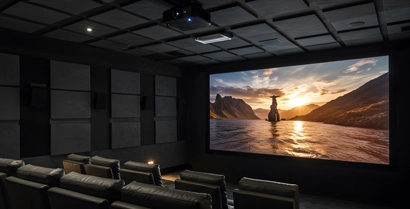
If dialogue sounds muddy at normal volume, reflections are often masking speech detail. Home theater acoustic treatment helps voices cut through cleanly without pushing the center channel louder. It’s one of the fastest ways to make movies easier to follow.
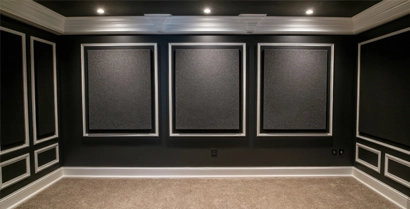
When music or movies feel fatiguing, early reflections are a common cause. Properly placed acoustic wall panels soften the “sharp” edge and reduce that splashy sound you get off bare walls and ceilings. The result is a smoother, more comfortable listening experience, especially at moderate to higher volumes.

Boomy bass usually comes from the way low frequencies build up in corners and along walls. Bass traps and targeted low-frequency control help smooth those peaks and dips so bass feels punchy, not bloated. You also get more consistency from seat to seat, which matters a lot in home theaters and hi-fi rooms.
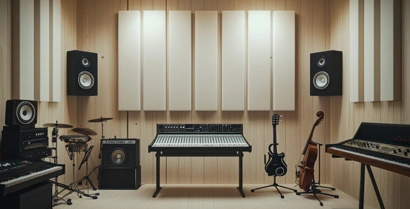
If vocals never feel locked to the center or instruments smear across the soundstage, reflections are likely interfering with imaging. Room acoustic treatments can improve focus and separation so placement feels more precise. This is a big part of hi-fi room acoustic treatment and home studio monitoring accuracy.
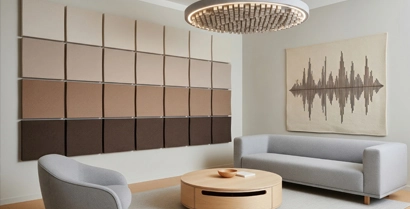
A room that sounds great when empty can change dramatically once furniture, rugs, or décor move around. A well-designed treatment plan accounts for how the space is actually used day to day. The goal is stable performance whether it’s a living room, music room, or acoustic treatment home studio setup.
Most homeowners don’t need treatment everywhere. The best results come from focusing on the rooms where clarity and comfort matter most, then choosing the right mix of acoustic panels, bass control, and wall or ceiling treatments.
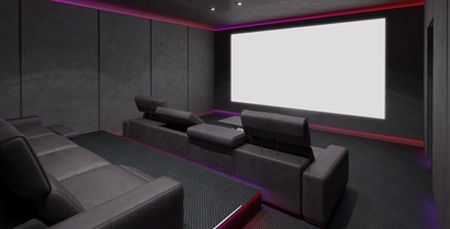
Reduce reflections that blur dialogue and soften impact. A good plan improves intelligibility and immersion without pushing the volume higher.
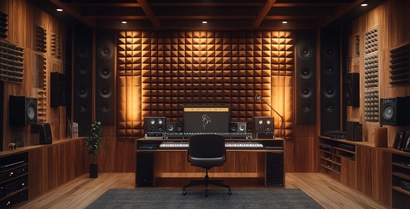
Control reflections so recordings sound cleaner and monitoring feels more reliable. Treatment helps your mixes translate better to other systems.
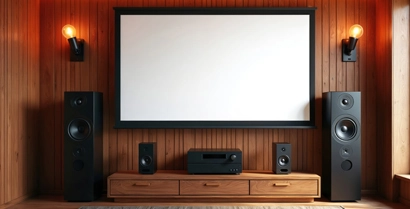
Improve imaging, separation, and focus so vocals and instruments “lock in” naturally. Small changes can make high-quality recordings shine.

Open layouts, tile, and glass often add echo. Treatment can improve clarity while keeping the room looking like a home, not a studio.

Make practice and listening more enjoyable by reducing harshness and controlling reflections, especially in smaller or brighter rooms.
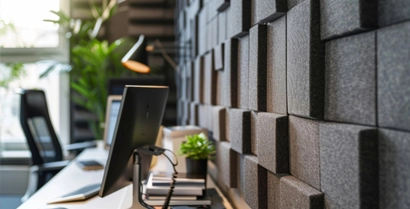
Reduce echo so your voice sounds clearer on calls and the room feels less fatiguing during long workdays.
Describe the room and what you’re hearing. We’ll help you identify whether the priority is reflections, bass control, or a more isolation-focused approach.
These terms get mixed up a lot. Acoustic treatment improves what you hear inside the room by controlling reflections and balancing the sound. Soundproofing is about reducing noise transfer in or out of the room, and it often requires construction-level changes. If isolation is your main priority, we can talk through practical options based on your space and goals.
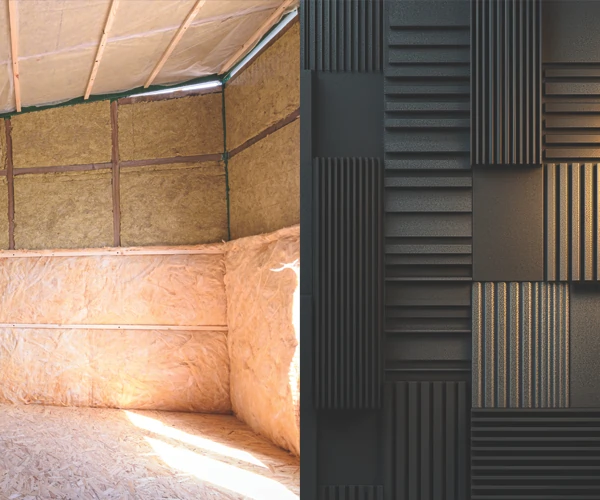

The goal is not to cover every surface. It’s to place the right treatments where they make the biggest difference.
Acoustic wall panels: Reduce early reflections that cause harshness and echo.
Bass traps: Smooth low-frequency buildup so bass feels tighter and more consistent.
Ceiling treatments (clouds): A powerful way to reduce reflections without changing wall layouts.
Diffusers: Help keep the room natural and lively while avoiding “slap” reflections.
Wall treatments for aesthetics: Options that blend into living spaces, not just dedicated theaters.
Quick conversation: Your room, your goals, and what you’re hearing.
Room evaluation: Layout, surfaces, seating, and speaker positions.
Treatment plan: Recommendations and placement based on the room’s needs.
Installation: Timing depends on room size and the scope of the plan.
Listening checks: Fine-tune for real-world use, not just theory.
If you’re upgrading equipment or building a new setup, treating the room first can save time and make every component perform better. Share your room details and we’ll point you in the right direction.
Yes. Room acoustic treatments reduce echo and unwanted reflections, smooth out bass, and improve clarity. In many rooms, treatment makes a bigger audible difference than upgrading speakers because it fixes what the room is doing to the sound.
Acoustic treatment improves the sound inside the room by controlling reflections and bass. Soundproofing is about reducing noise transfer in or out of the room and often requires construction-level changes like sealing gaps, adding mass, or decoupling surfaces.
Not in the way most people mean “soundproof.” Acoustic panels mainly reduce echo and reflections inside the room. They can make a room feel calmer, but they do not reliably stop noise from traveling through walls, doors, or ceilings.
It depends on the room size, surfaces (tile, glass, drywall), ceiling height, and your goals. Some rooms only need a few panels placed at key reflection points, while others benefit from a mix of panels, bass traps, and ceiling treatment.
Home theater wall panels are usually placed at early reflection points on side walls and sometimes the front or rear walls, based on speaker and seating positions. The goal is clearer dialogue and more precise surround effects without making the room sound “dead.”
Bass traps reduce low-frequency buildup that causes boomy or uneven bass. If bass sounds different depending on where you sit, or if it feels bloated in corners, bass traps are often one of the most effective upgrades you can make.
Acoustic panels mainly target mid and high frequencies (echo, harsh reflections, clarity). Bass traps are designed to control low frequencies (boomy bass, room modes, uneven bass response). Many rooms need both for balanced results.
Not if it’s planned correctly. A good design balances absorption with the room’s natural liveliness. In some spaces, diffusion is used to keep the room sounding open while still controlling harsh reflections.
Yes. Many living room acoustic treatment plans use subtle wall treatments, carefully placed panels, and finishes that blend with décor. The goal is better clarity and comfort without turning the room into a studio.
Often, yes. If your office sounds hollow or echoey, acoustic treatment can make your voice clearer on calls and reduce listening fatigue. If outside noise is the main issue, that’s more of a soundproofing conversation.
It depends on the room size, the number of treatments, and how the plan integrates with the space. Some installs are straightforward, while others involve more detailed placement and finish considerations.
Soft furnishings help, but they’re not a complete solution. Many rooms still have strong reflections off walls and ceilings and low-frequency issues that furniture won’t fix. Treatment is about controlling the right frequencies in the right places.
Home theaters, home studios, hi-fi listening rooms, music rooms, and living rooms are the most common. Any room where you want clearer speech, better music detail, or more consistent bass is a good candidate.
They can reduce echo inside the room, which may make outside noise feel less “bright,” but they do not reliably block noise coming through walls or windows. For noise transfer, you typically need soundproofing measures like sealing gaps and adding mass.
Yes. Many projects start with the room that matters most (home theater, studio, or living room), then expand to other spaces once the homeowner hears the difference and understands what works in their home.
Most homeowners don’t need treatment everywhere. The best results come from focusing on the rooms where clarity and comfort matter most, then choosing the right mix of acoustic panels, bass control, and wall or ceiling treatments.
Acoustics is a major field of research that is complex and constantly developing. However, at a basic level, acoustics is tied to reverberation, or reflection, of sound waves. The acoustics of a space is determined partially by the amount of time it takes a sound to start fading away after the wave is initiated. This is called the rate of decay. Different rates of decay are preferred for different situations. For example, if you are in a restaurant having a conversation, a fast rate of decay is ideal. For concert halls, rooms are designed to have acoustics that allows for long rates of decay—this type of design is appropriate for listening to both live music and recorded music at home.
The rate of decay is determined in large part by how the sound waves reverberate in a room. It is necessary to control and direct the way the reflections occur in order to improve the acoustics of the space.
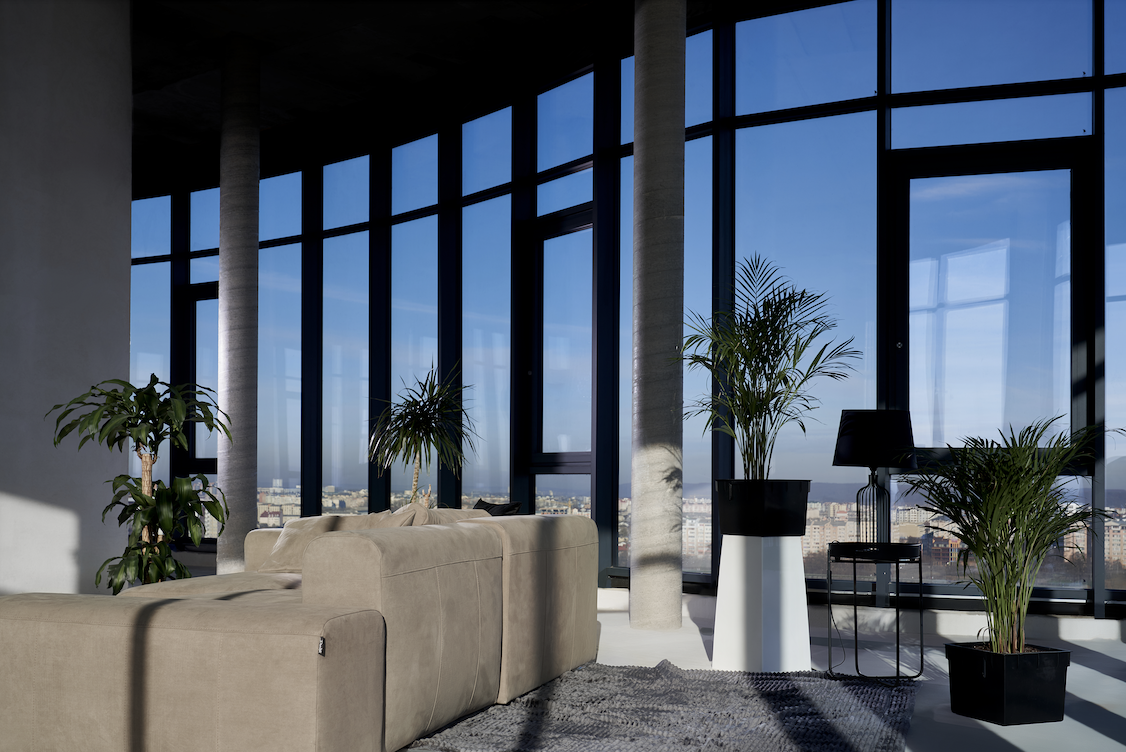
There are several different things that can impact the acoustics of a room. A plain, rectangular room without any wall or ceiling features offers the least amount of reflection. However, it is very rare to find a room that is designed in such a way, especially in modern homes. Most rooms have features like graduated ceilings, crown molding, HVAC vents, pillars, and multiple open spaces, which can all affect the acoustics of the space.
Curved walls are another feature that impacts the acoustics. If your walls are curved, you can picture the way they may trap the sound waves and change the way they bounce around the room. The size of the room also matters as sound waves will bounce back and forth off walls in small rooms much faster than in large spaces.
Everything you put into the room also has an impact on the acoustics. Some materials absorb sound waves, while others bounce them vigorously. Plants, furniture, carpets, drapes, and other design features are key factors to consider when it comes to the acoustics of your space. Your audio technician may even recommend some things that you should add or remove from your media room to improve the sound quality.
Room acoustic treatments are panels that absorb sound waves in rooms in which too much reverberation is occurring. These panels help to change the acoustics of a room to achieve the ideal amount of reverberation for the best sound quality.
Acoustic treatments come in a wide array of sizes and shapes. This allows for them to be used in different ways in different rooms. It is also possible to have custom acoustic treatments designed so that they address your needs specifically. Many homeowners find that a custom solution is best in rooms with unique design features to ensure that the treatments do not look obtrusive. Likewise, they can be custom designed in a range of colors to blend into your space rather than standing out. Homeowners who are concerned about the appearance of acoustic treatments are often pleasantly surprised by how seamlessly custom designs can fit into their homes.
Getting your acoustic treatments just right is both an art and a science. You need to deaden sound in your room, but you don’t want to stop all of the reverberation—some bouncing of sound waves is good. You have to find the right balance with the amount and placement of acoustic treatments to enhance the sound quality in your space. The best way to do this is to work with an experienced audio technician who can make the kinds of precise tweaks that are necessary. Generally, covering about 40% of the two longest walls in your room with acoustic treatments will create the kind of balance that is needed. However, the specific features of your room could make it necessary to cover more or less of the wall space to achieve the best sound quality.
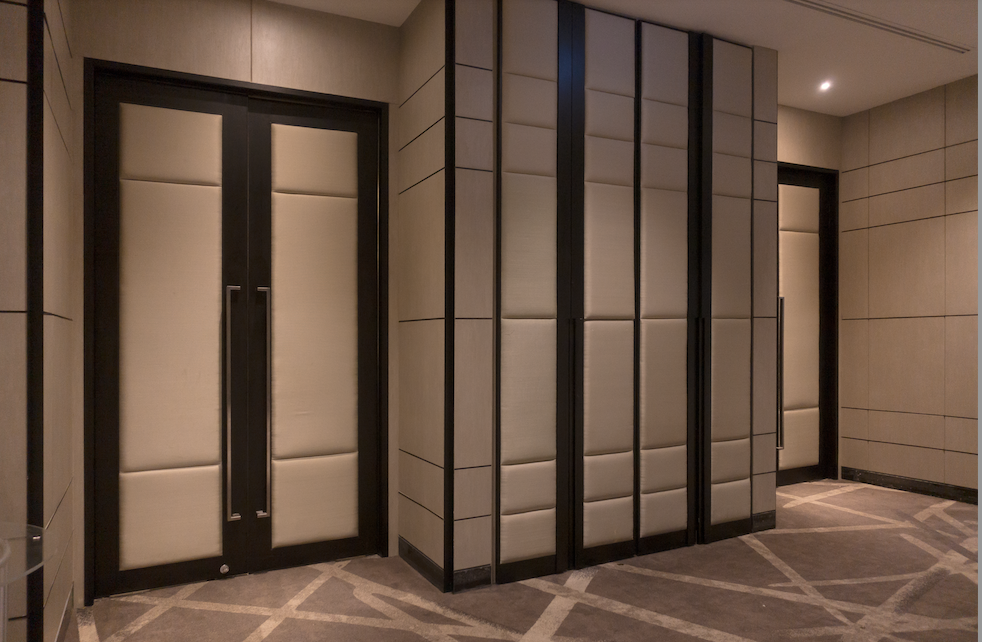
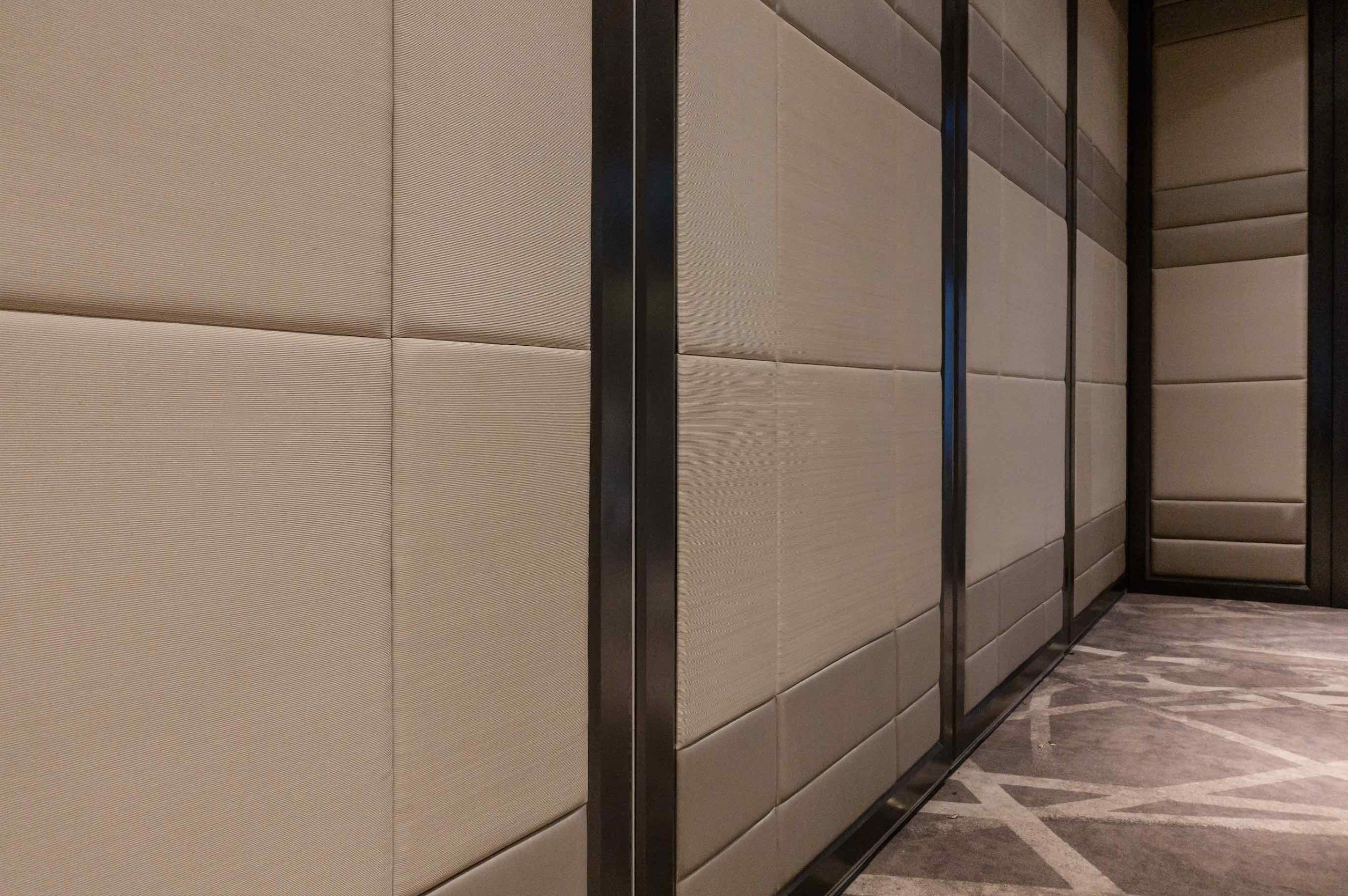
Even with a whole-home audio system, most people don’t want acoustic treatments in every room. Focus on putting them in the areas in which you will be watching and listening most often. For example, acoustic treatments are almost always valuable in home theaters and media rooms, and if you have a room in which you listen to music often, treatments may make a huge difference there. For rooms in which you are casually watching television or playing music in the background while you do other things, it may not be necessary to have acoustic treatments.
Let Technology Specialists help you achieve the best possible acoustics in your entertainment spaces. Our experts use the latest technologies and tools to create customized home theaters, audio systems, and more. For additional information about acoustic treatments in Tucson, get in touch with our team today.

Licensed & Bonded
ROC# 285238
ROC# 306779
HOURS
Monday - Friday
8 am - 5 pm
6615 N Oracle Rd
TUCSON, AZ 85704
(520) 784-2500
4418 E SPEEDWAY BLVD Ste. B
TUCSON, AZ 85712
(520) 784-2500
4351 N FAIRVIEW AVE Ste. B
TUCSON, AZ 85705
(520) 784-2500
SIERRA VISTA
999 E FRY BLVD SUITE 203
SIERRA VISTA, AZ 85635
(520) 784-2500